
Customer Experience (CX) in B2B and B2C models may appear similar on the surface, but they are fundamentally different in nature. An effective CX strategy for B2B cannot be applied word for word to B2C—and vice versa. Correctly understanding these differences is the key to designing an effective customer journey.
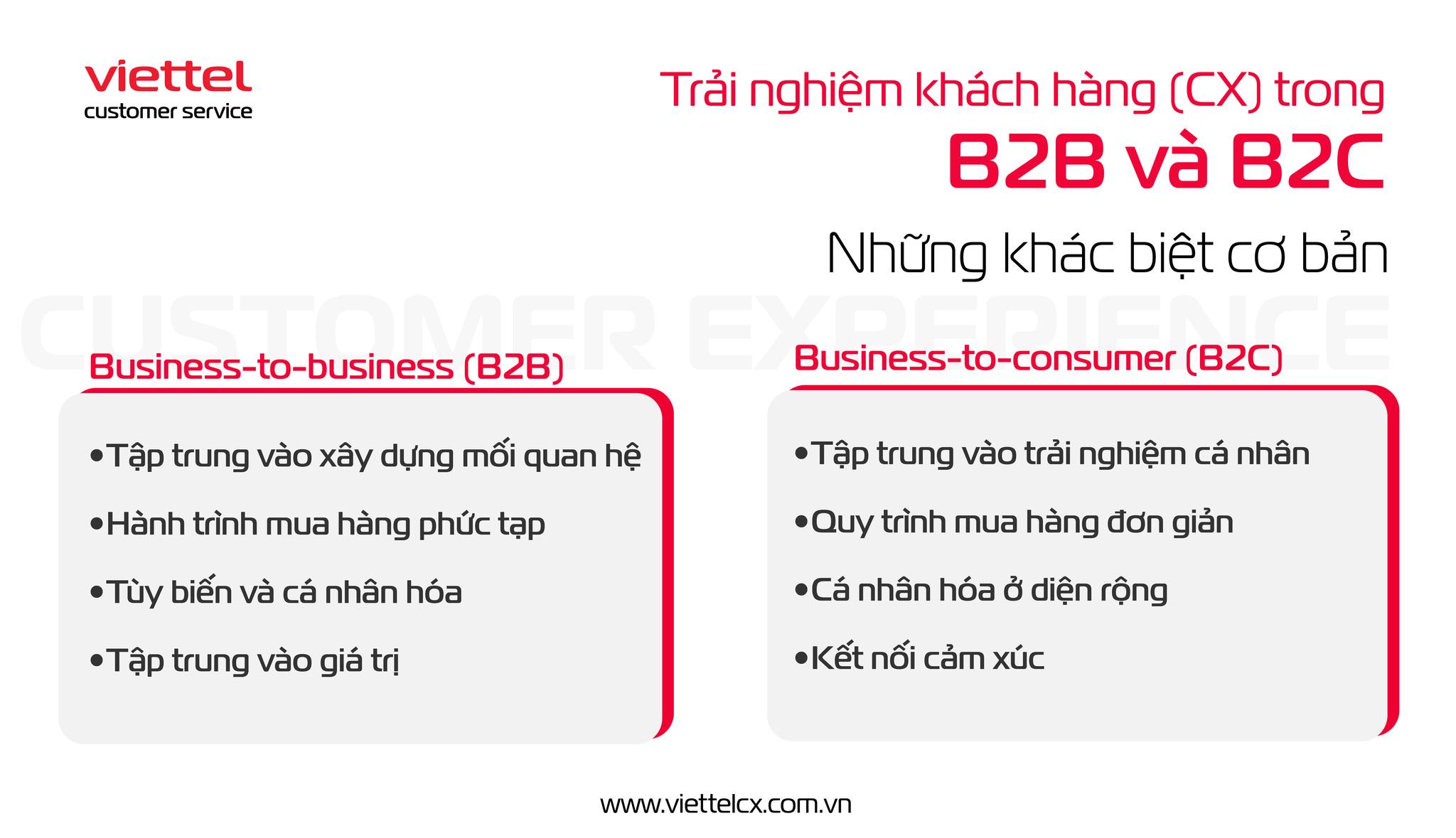
B2B CX: Focusing on Relationships and Multidimensional Journeys
In the B2B model, customers are businesses, yet purchasing decisions typically involve multiple individuals with different titles, needs, roles, and positions. Consequently, the customer journey is longer, requiring more touchpoints and consensus from various parties.
The crux of B2B CX lies in building long-term, multidimensional relationships. Customers expect to be served with products, services, and experiences that are industry-tailored and customized to their organizational scale and culture. Deep personalization, detailed consultation, and omnichannel support are the deciding factors for customer loyalty and satisfaction.
B2C CX: Focusing on Emotion and Seamless Experiences
Conversely, in B2C, customers are individuals, and their experience is deeply tied to emotion, convenience, and seamlessness. The B2C buying journey is usually shorter, but customers hold high expectations for response speed and consistency. Just a single second of delay or a fragmented experience can cause them to abandon a brand.
A prominent feature of B2C CX is the ability to continuously capture customer signals, tracking behaviors, preferences, and feedback over time to adjust the experience accordingly. B2C brands must ensure that every touchpoint delivers a seamless, convenient, and personalized feeling—from advertising, websites, and applications to customer support and after-sales service.
No One-Size-Fits-All Formula – CX Must Be Tailored
Customer experience is not a generic formula applicable to every model. A CX strategy must be custom-designed for each type of customer base, built upon:
Customer target: Businesses or individuals.
Behavior and needs: Multi-party participation or individual, long-term or fast-paced.
Interaction channels and timing: Omnichannel, continuous, and seamless.
By starting with a deep understanding of the customer, businesses can craft experiences that address the right needs, through the right channels, and at the right time—boosting conversion efficiency, loyalty, and customer lifetime value (CLV).
Conclusion
B2B and B2C cannot share the same CX formula. Each model demands its own tailored experience design strategy, rooted in the specific behaviors, needs, and emotions of its customers. Clearly understanding this distinction will empower businesses to design highly effective customer journeys that both leave a positive impression and build sustainable relationships.
Viettel Customer Service is a subsidiary of the Viettel Group, operating in the technology and customer service sector. The company provides a comprehensive ecosystem including services (Contact Center Outsourcing, BPO, Upsale, Customer Experience, Loyalty, Document Processing and Digitization, Warranty & Repair Services) and technology solutions (OmniX, CXBot, KnowX Hub, AI-DMS, vCOC, InsightCI, WorkforceX). Driven by the mission of "Elevating customer experience with innovative technologies," Viettel Customer Service continuously innovates to deliver optimized solutions that help businesses enhance operational efficiency and drive customer satisfaction
Contact Viettel Customer Service today for Customer experience consulting tailored to your business!
Contact Information:
Hotline: 1800 9397 | Email: dvkh@viettel.com.vn
Website Viettel Customer Service | Facebook Viettel Customer Service | Zalo Viettel Customer Service
Address: 23rd floor, Vinacomin Building, 3rd Duong Dinh Nghe Street, Yen Hoa Ward, Hanoi.







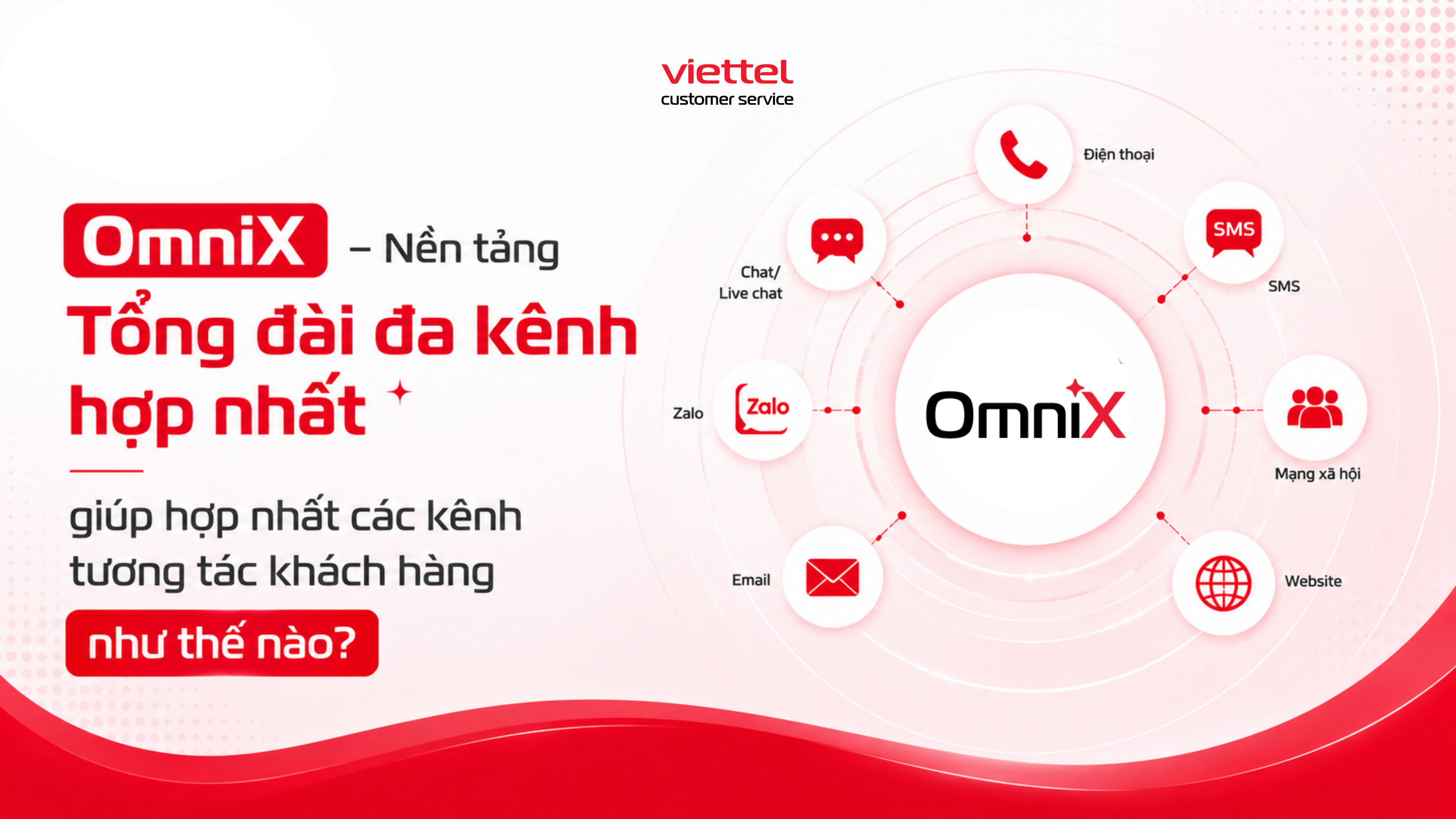

![[VnEconomy] Unifying Customer Service Channels: A Strategic Step in the Age of AI](/cms/api/v1/public/files/view/omnix-bao-MjC3Jlm9.png)


