
Today’s customers may begin their journey on Facebook, continue via Zalo, call the contact center, and finish with a chat on the website. What they expect is not for businesses to simply be present on as many channels as possible, but for every interaction to be connected and seamless. This is precisely why the unified omnichannel model is becoming an important trend in customer service operations.

1. Why is unified omnichannel becoming a major trend?
As the number of customer touchpoints continues to grow, the limitations of the traditional Multichannel model are becoming increasingly apparent: businesses may operate across multiple channels, yet their data and processes remain fragmented. According to Salesforce, 79% of customers expect consistent interactions across departments, while 56% say they often have to repeat or re-explain information to different employees.
This is also one of the common challenges faced by Contact Centers: fragmented customer service channels make it difficult for businesses to manage operations consistently, control service quality, and measure customer experience in real time. As a result, the focus is shifting from “adding more channels” to “unifying channels.”
2. How is unified omnichannel different from simply having multiple channels?
While Multichannel focuses on providing customers with multiple ways to get in touch, Omnichannel aims to connect those touchpoints into one continuous customer journey. Calls, messages, emails, social media, and live chat are managed within the same system, allowing agents to access customer information and interaction history instead of handling each channel independently.
This is becoming increasingly important as customers expect to move flexibly between different forms of communication. Zendesk CX Trends 2026 reports that 76% of customers would prefer a company if they could send text, images, and videos within the same conversation without having to start over.
3. Key trends shaping Omnichannel today
3.1. Unifying data and interaction history
Omnichannel is not simply about bringing different channels into one interface; it also requires creating a unified view of the customer. When data and interaction history are connected, agents can understand what customers have previously discussed and continue supporting them seamlessly even when they switch to another channel.
3.2. AI and Automation as key technology layers
Another major trend is the integration of Omnichannel with AI to automate repetitive tasks, analyze data, and support agents. Zendesk states that 74% of consumers now expect customer service to be available 24/7 due to the widespread adoption of AI, showing that speed and continuous service availability are becoming new standards.
3.3. Moving from reactive support to proactive customer care
When data and channels are connected, businesses can design automated customer care journeys based on customer behavior instead of simply waiting for customers to reach out. These workflows can be triggered and deployed consistently across multiple channels, supporting customer service, marketing, and sales throughout the entire journey.
4. What value does unified omnichannel bring to businesses?
The greatest value of Omnichannel does not lie in the number of channels a business offers, but in its ability to operate them as one unified system. Businesses can reduce data fragmentation, centrally manage customer service activities, increase personalization, and deliver a more consistent customer experience.
Seamless experiences, in particular, are directly influencing customer retention. McKinsey research shows that more than half of surveyed customers are likely to switch to another provider if their cross-channel experience is inconvenient. As a result, Omnichannel is gradually evolving from a technology option into a competitive capability for businesses.
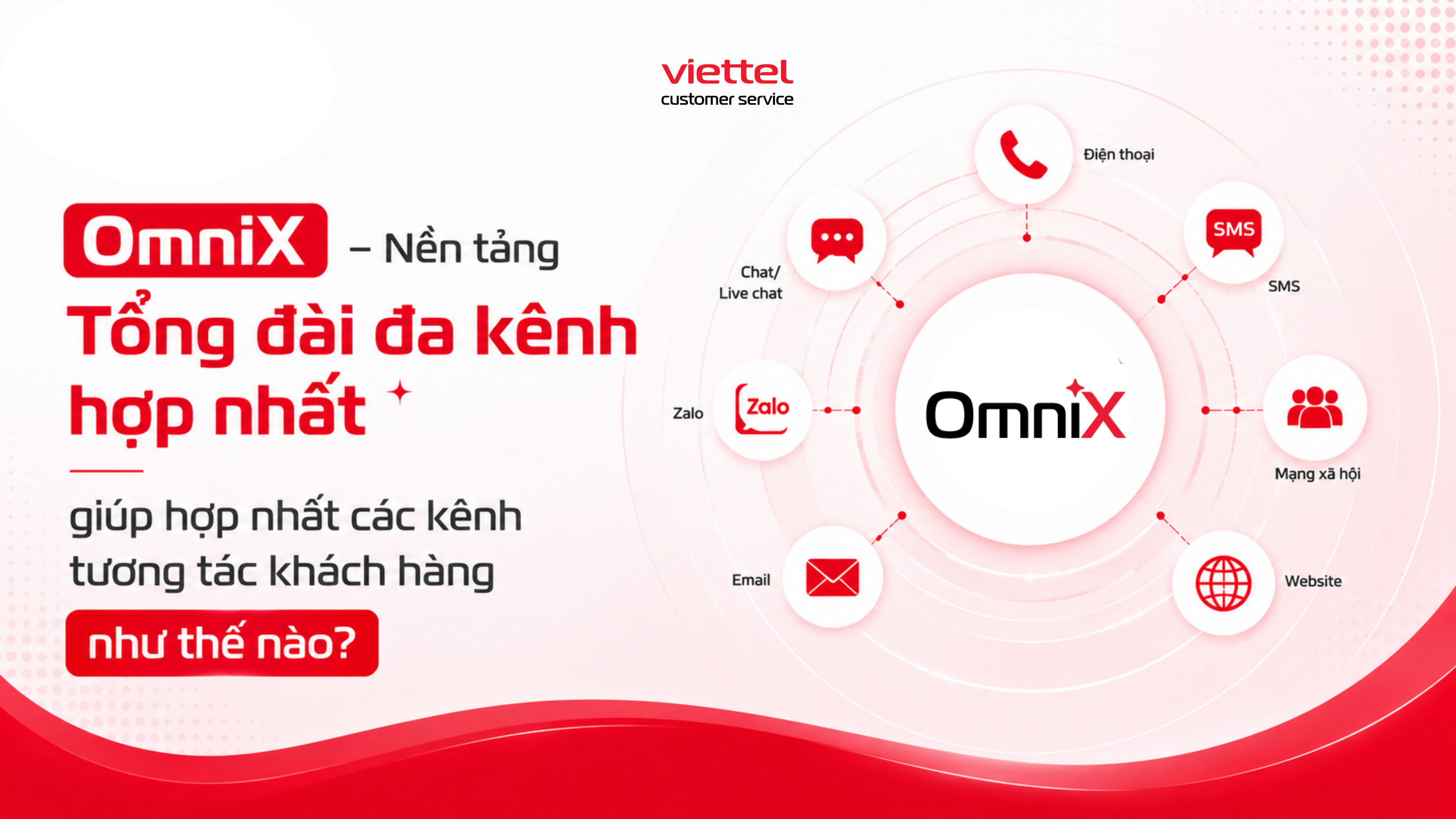
5. OmniX – A unified omnichannel contact center platform from Viettel Customer Service
OmniX is a unified omnichannel contact center platform developed by Viettel Customer Service, enabling businesses to centrally manage interactions across Voice, Zalo OA, Facebook, Website Chat, and many other channels on a single platform. The system integrates Mini CRM, Ticketing, Marketing Automation, Auto Call, and AI technologies such as Callbot, Chatbot, and AI Analysis, helping businesses connect data, automate processes, and improve customer service efficiency.
In a context where customers no longer evaluate individual channels separately but instead judge a business based on the entire customer journey, moving from fragmented multichannel operations to a unified omnichannel model will be an important step toward building a customer service system that is seamless, intelligent, and ready to scale.
Viettel Customer Service is a subsidiary of the Viettel Group, operating in the technology and customer service sector. The company provides a comprehensive ecosystem including services (Contact Center Outsourcing, BPO, Upsale, Customer Experience, Loyalty, Document Processing and Digitization, Warranty & Repair Services) and technology solutions (OmniX, CXBot, KnowX Hub, AI-DMS, vCOC, InsightCI, WorkforceX).
Contact Viettel Customer Service today for solutions tailored to your business!
Contact Information:
Hotline: 1800 9397 / Email: dvkh@viettel.com.vn
Website Viettel Customer Service / Facebook Viettel Customer Service / Zalo Viettel Customer Service
Address: 23rd floor, Vinacomin Building, 3rd Duong Dinh Nghe Street, Yen Hoa Ward, Hanoi.








![[VnEconomy] Unifying Customer Service Channels: A Strategic Step in the Age of AI](/cms/api/v1/public/files/view/omnix-bao-MjC3Jlm9.png)


