
As businesses accelerate their digital transformation, customer service has expanded beyond traditional phone support to include channels such as Voice, Zalo Official Account, Facebook Messenger, Viber, Telegram, Email, and Website Live Chat. While offering multiple communication channels makes it easier for customers to reach businesses, it also introduces new challenges in customer data management, operational efficiency, and service consistency.
This is why the terms Multichannel and Omnichannel are frequently discussed in customer service and customer engagement strategies. Although both approaches involve serving customers across multiple channels, they differ significantly in how customer interactions are managed and how customer experiences are delivered. Understanding these differences helps businesses choose the right strategy to improve customer service and streamline operations.
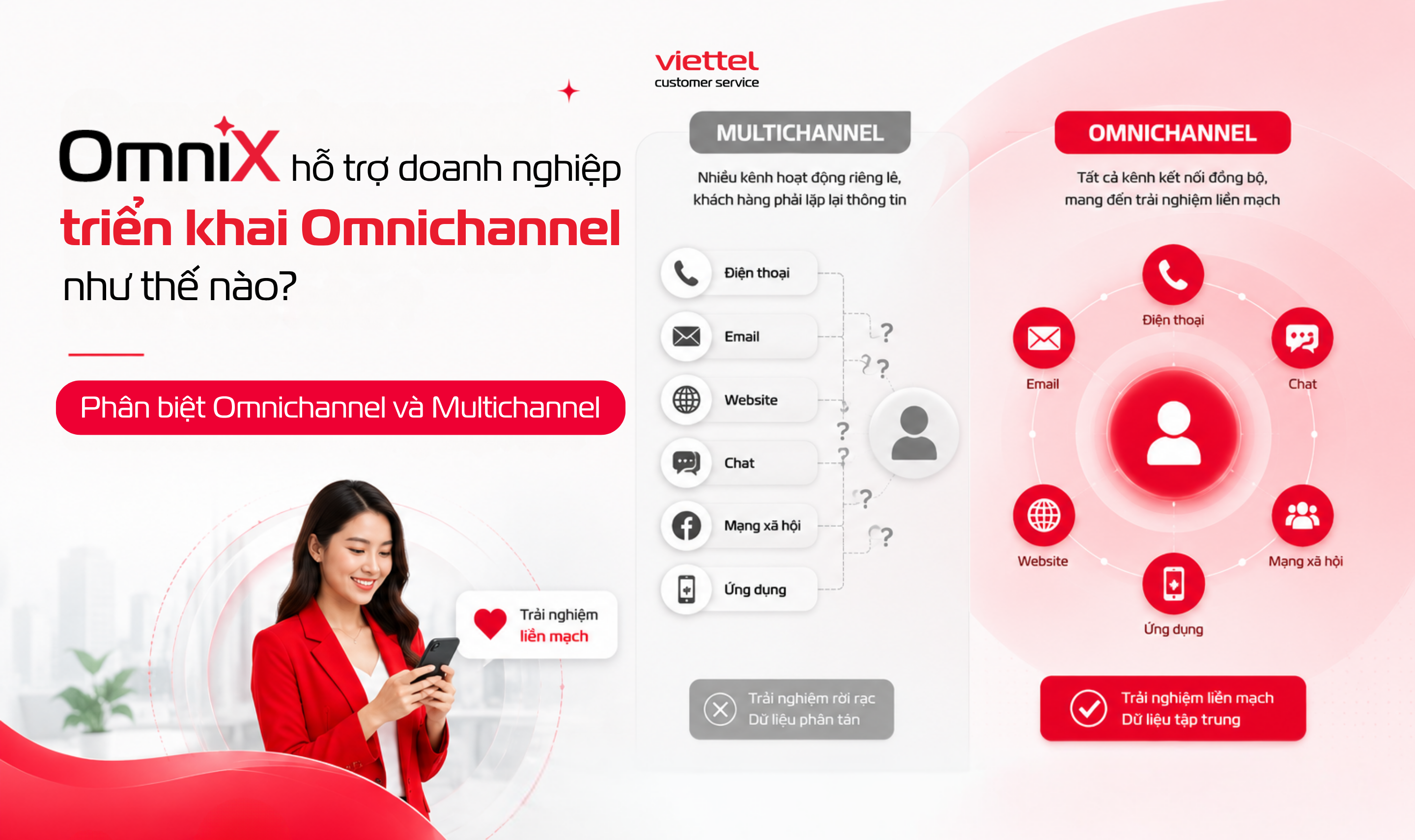
What Are Multichannel and Omnichannel?
Multichannel is a customer service approach that allows businesses to communicate with customers through multiple channels. These may include phone calls, Zalo Official Account, Facebook Messenger, Email, or other messaging platforms. However, each channel typically operates independently and may be managed through separate systems.
For example, a customer might start a conversation on Facebook Messenger and later call the company's hotline. In a Multichannel environment, the customer service representative handling the phone call may not have access to the previous Messenger conversation. As a result, the customer must repeat the same information, creating a fragmented experience.
Omnichannel, on the other hand, goes beyond simply providing multiple communication channels. It connects all customer interactions into a single, unified platform where customer data and conversation history are synchronized across every touchpoint.
Regardless of whether customers switch from Voice to Email or from Live Chat to Zalo Official Account, customer service representatives can instantly access the complete interaction history and continue the conversation without interruption.
Simply put, Multichannel focuses on offering multiple communication channels, while Omnichannel focuses on delivering one seamless customer experience across all channels.
What Is the Difference Between Omnichannel and Multichannel?
The most significant difference lies in how customer information and communication channels are connected.
In a Multichannel model, each communication channel functions independently. Customer information is often stored in separate systems, requiring employees to switch between applications or manually search for previous interactions. This increases handling time and makes it difficult to deliver consistent customer service.
By contrast, an Omnichannel platform centralizes customer information from every communication channel into a single management system. Whether customers contact the business via Voice, social media, Email, or Website Live Chat, agents can immediately access their profiles, interaction history, and previous conversations.
This centralized approach also improves business management. Instead of combining reports from multiple platforms, managers can monitor operational performance, customer service KPIs, service quality, and customer interactions through one unified dashboard with real-time visibility.
When Should Businesses Move from Multichannel to Omnichannel?
For smaller organizations or businesses managing only a few communication channels, a Multichannel approach may be sufficient. However, as customer interactions become more complex and communication volumes increase, managing disconnected systems becomes increasingly inefficient.
Businesses should consider adopting an Omnichannel strategy when they encounter situations such as:
Customers repeatedly providing the same information when switching communication channels.
Customer data being stored across multiple disconnected systems.
Difficulty monitoring customer service KPIs and service quality.
Customer service agents spending excessive time searching for customer information.
A need to automate workflows and integrate AI into customer service operations.
By centralizing communication and customer data, businesses can improve operational efficiency while delivering a more consistent customer experience.
How Does OmniX Help Businesses Manage Omnichannel Customer Service?
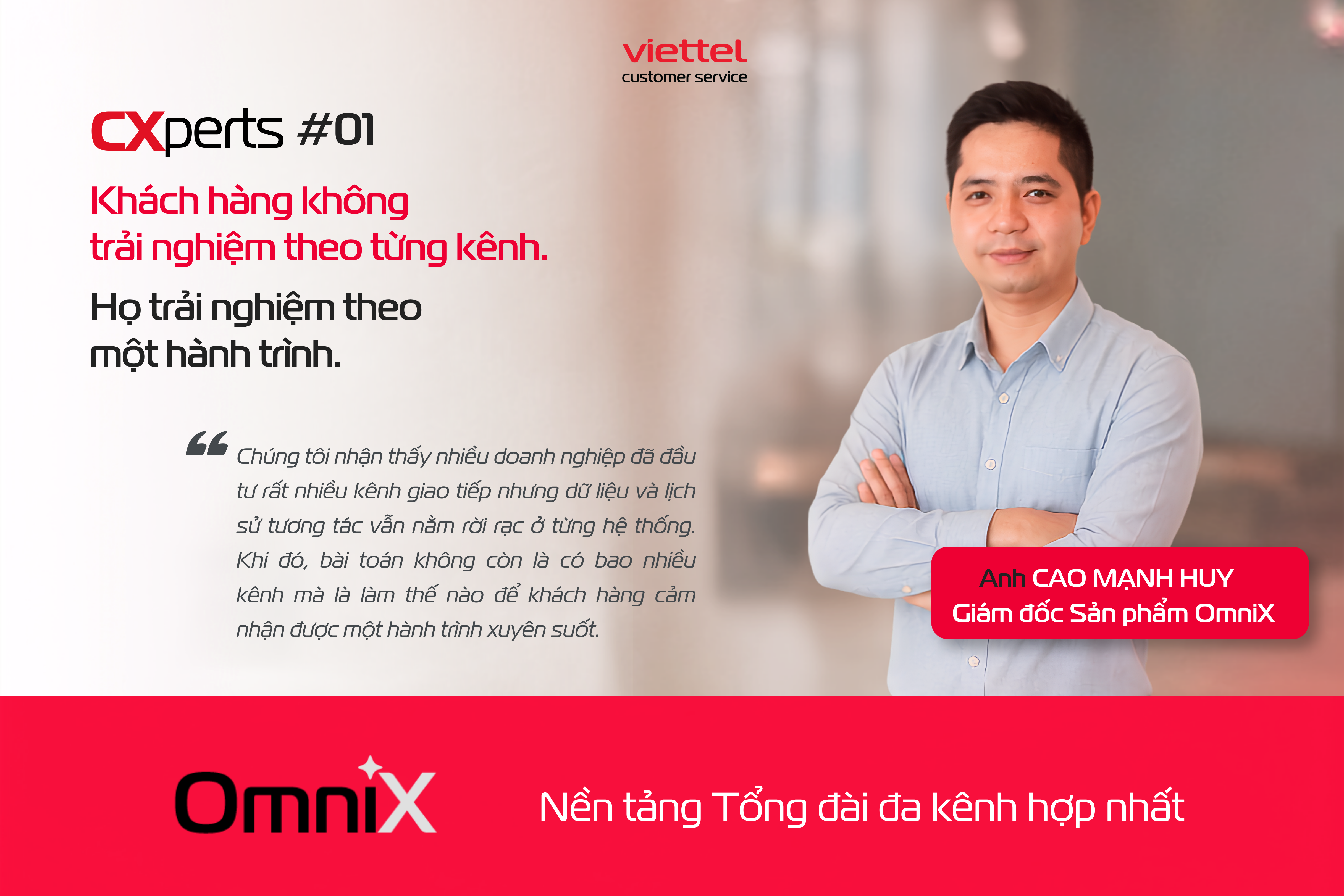
OmniX – Omnichannel Contact Center Platform, developed by Viettel Customer Service, enables businesses to manage all customer interactions through a single, centralized platform.
OmniX integrates Voice, Zalo Official Account, Facebook Messenger, Viber, Telegram, Email, and Website Live Chat into one unified interface. Every customer profile, interaction history, and conversation is synchronized, allowing customer service agents to continue conversations seamlessly without asking customers to repeat information.
Beyond communication management, OmniX includes an integrated Mini CRM, Ticket Management System, and Omni Flow to standardize customer service processes from request intake to resolution. This ensures consistent service quality across departments and communication channels.
OmniX also incorporates AI-powered capabilities such as AI Callbot, AI Chatbot, and AI Analysis to automate repetitive customer service tasks, analyze conversations, and monitor service quality in real time. Combined with interactive dashboards and comprehensive reporting, managers can easily track customer service KPIs, monitor team performance, and make data-driven decisions to continuously improve customer experience.
Benefits of an Omnichannel Customer Service Strategy
Implementing an Omnichannel strategy provides businesses with far more than additional communication channels. It creates a connected customer service ecosystem where every interaction contributes to a unified customer journey.
By centralizing customer data and communication, businesses can deliver more consistent customer experiences, reduce response and resolution times, improve collaboration between departments, and increase employee productivity. At the same time, centralized reporting enables managers to monitor operational performance, measure customer service effectiveness, and optimize business processes based on real-time insights.
Both Multichannel and Omnichannel help businesses communicate with customers through multiple channels, but they serve different purposes. While Multichannel focuses on expanding communication options, Omnichannel focuses on connecting every interaction to create a seamless, personalized customer experience.
With omnichannel communication, centralized customer data, AI-powered automation, workflow management, and real-time analytics, OmniX – Omnichannel Contact Center Platform helps businesses build a modern customer engagement strategy, improve service quality, optimize operations, and support long-term business growth.
Viettel Customer Service is a subsidiary of the Viettel Group, operating in the technology and customer service sector. The company provides a comprehensive ecosystem including services (Contact Center Outsourcing, BPO, Upsale, Customer Experience, Loyalty, Document Processing and Digitization, Warranty & Repair Services) and technology solutions (OmniX, CXBot, KnowX Hub, AI-DMS, vCOC, InsightCI, WorkforceX).
Contact Viettel Customer Service today for solutions tailored to your business!
Contact Information:
Hotline: 1800 9397 / Email: dvkh@viettel.com.vn
Website Viettel Customer Service / Facebook Viettel Customer Service / Zalo Viettel Customer Service
Address: 23rd floor, Vinacomin Building, 3rd Duong Dinh Nghe Street, Yen Hoa Ward, Hanoi.







-ve-omnix-Wuf9WzBd.png)
![[CafeF] The Transformation of Vietnam's Top Call Center](/cms/api/v1/public/files/view/thumbnail-cafef-kozoscl7.png)