
Twenty years ago, Viettel established Vietnam's largest call center. Today, the once labor-intensive operation has reinvented itself by redefining its core capabilities, achieving a remarkable transformation.

In her office, Ms. Pham Thanh Van, Deputy Director of Viettel Customer Service, did not begin our conversation with numbers. The former "female general" of Viettel's Call Center did not talk about revenue, new contracts, or the company's global ambitions.
Instead, the story began with the sound of a ringing phone.
"There were times when the phones simply never stopped ringing," Ms. Van recalled. Back then, Viettel's Call Center was often described as the "central nervous system" of the Group, handling millions of customer calls from across the country every day.
Some customers reported network outages. Others forgot their passwords. Some disputed their bills, while others simply needed a few extra minutes of explanation to feel confident continuing to use the service. On the other end of the line, thousands of agents worked around the clock, rarely allowed to keep customers waiting.
At the time, success meant answering calls a little faster, providing better responses, and making customers just a little more satisfied. At its peak, Viettel employed more than 7,000 call center agents—most of them women—handling over one million calls a day, making it the largest call center in Vietnam.
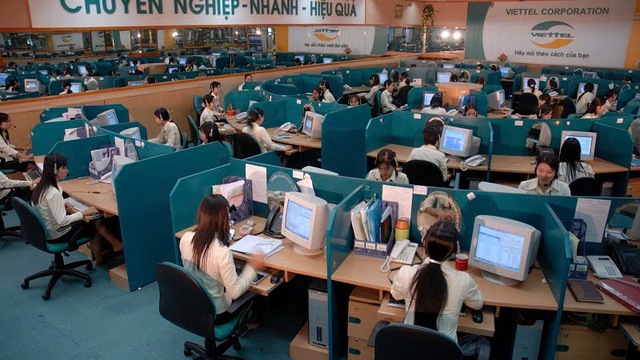
They transformed a job mocked with the derogatory nickname "the profession of being scolded" into a place that resolved customer questions, incidents, and frustrations. Viettel's Call Center evolved into a Contact Center – not only the largest customer service center but also the most powerful in Vietnam. They did not just listen and answer questions; they were also granted the authority to direct other departments to resolve incidents for customers in the shortest possible time.
But then, technology changed. Along with the popularity of smartphones and mobile applications, customers began performing operations on apps themselves, followed by chatbots, then AI (artificial intelligence)... The calls that were once the "lifeline" of the Call Center began to thin out and plummet. This also coincided with customers no longer calling as they once did, but instead calling and messaging via Zalo, Facebook, Viber...
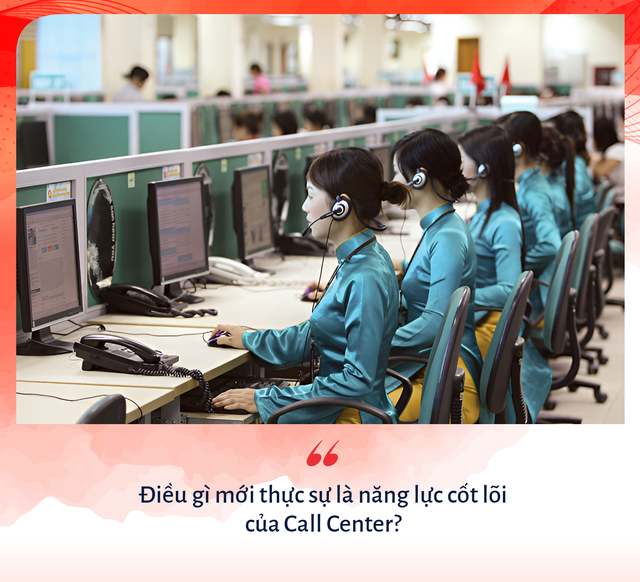
Where will the future of the Viettel Call Center go if calls continue to decrease?
In 2020, during a discussion with a Viettel Group leader, a question changed the future of the Call Center: "What is truly the core competency of the Call Center?"
While many thought of: call resolution, customer care... this leader shook his head. Ms. Van recounts: "He told us: It is the ability to organize the apparatus and operate on a large scale." That statement was the moment that changed the mission as well as the journey of the Viettel Call Center thereafter.

In reality, if one looks through the outward operational layer, the core competency that the Viettel Call Center had built was the ability to organize thousands of people, coordinate millions of requests, design processes, control quality, and understand customers deeply enough to know what they need...
If they continued to consider the goal as receiving more calls, the Call Center would shrink further along with the development of AI. But if that operational capacity is taken to solve the problems of other businesses, a completely new market opens up.
That idea became the foundation for Viettel to establish Viettel Customer Service (VCX): a company that no longer sells switchboard services, but sells the ability to manage customer experience at scale, the ability to understand user behavior, and data operations. This was not just about establishing a new company, but a transformation of an entire business model. For the first time, a capability formed from millions of calls was redefined by Viettel to enter the AI era.
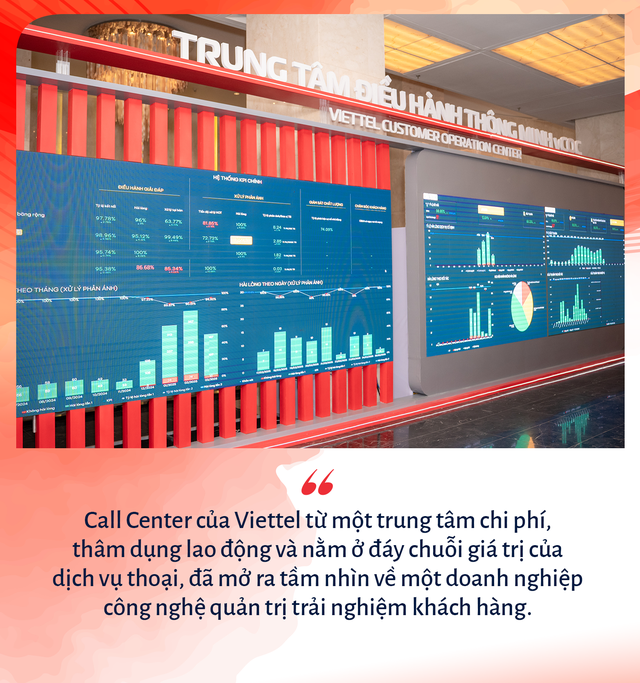
In fact, that change stemmed from the customers themselves. While they previously contacted mainly via voice and SMS, today, the majority of interactions have shifted to digital platforms like Zalo, Messenger, Viber, or the companies' own applications.
What customers need is no longer a switchboard operator at the other end of the line, but a seamless experience at every touchpoint. For telecom operators, value has also gradually shifted from traditional voice services to 4G and 5G data infrastructure to serve that digital ecosystem.
Customers have changed, so the Call Center must change according to the customers. From a center receiving calls, Viettel Customer Service was born to manage the entire customer experience journey in the digital environment. That is not just the transition from Call Center to Customer Service, but an inevitable step in the AI era.
Therefore, Viettel's Call Center, from a cost center, labor-intensive, and at the bottom of the voice service value chain, has opened up a vision of a technology enterprise managing customer experience, carrying the knowledge accumulated over decades of serving more than 100 million customers in many markets around the world.

Looking from the outside, the Call Center is one of the fields affected earliest by artificial intelligence. The simple reason is that chatbots answer faster, voicebots work 24 hours a day, and repetitive questions are handled almost completely automatically... Tasks that once required thousands of operators now only need a few lines of code. And more importantly, customers no longer have to call as much as they did with Viettel's voice services or any other carrier before.
However, after that "enlightening" moment in 2020, the warriors at the Viettel Call Center did not let AI take their jobs but redefined their own core competencies.
Behind the Viettel Call Center is the ability to operate a system with thousands of people but functioning as a unified body. It is also the ability to receive millions of different requests, classify, coordinate, and track them until completion; it is the experience of designing processes so that customers do not have to wait too long, do not have to call back many times, and are always served according to a unified standard...
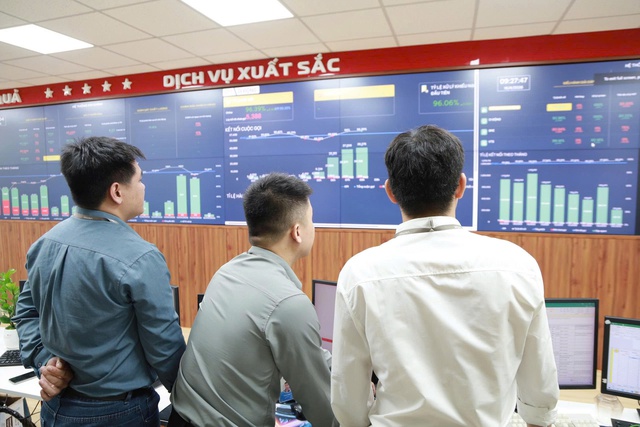
In other words, the phone is just a tool, while the operational capacity is what creates value. For that very reason, the question arises: If one can handle millions of calls per day, why not handle millions of interactions on digital platforms? If one can serve telecom customers, why not serve citizens, businesses, or other organizations? If one understands the behavior of hundreds of millions of Viettel subscribers in many countries around the world, why not design experiences for any industry that has customers?
Those questions gradually opened up a completely new perspective in the AI era. What Viettel possesses is not a Call Center, but an operational management capacity forged over more than two decades. That is something no AI can create on its own overnight.
The idea of establishing Viettel Customer Service (VCX) was also formed from that very perspective, but it took 5 years for that vision to be realized. In reality, the goal was not to set up another company but to open a new business industry, bringing the capability that once served Viettel exclusively into the market.
This is a capability built from millions of calls every day, but it does not stop at calls. Because Viettel does not want to become the best phone-answering company, but the company that helps customers create the best experience. That is the biggest difference between the Call Center of yesterday and the Viettel Customer Service of today.
One side is measured by the number of calls answered. The other side is measured by the number of calls customers no longer have to make. If customers do not have to call anymore, it means Viettel Customer Service has done it right. That is the philosophy that at the new company is called Customer Zero - a new approach learned from Amazon.
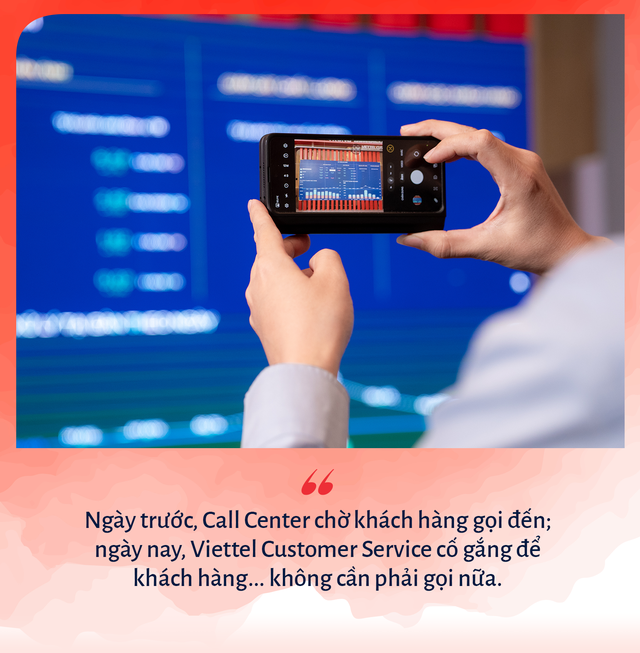
VCX wants the highest goal of customer service not to be resolving arising issues as quickly as possible, but to design a system intelligent enough so that those issues do not appear in the first place.
Perhaps that is also the biggest difference between the two stages: in the past, the Call Center waited for customers to call; today, Viettel Customer Service tries to ensure customers... do not need to call anymore.

In March 2025, Viettel Customer Service (VCX) was born. The proposal to split the Call Center from Viettel Telecom was submitted through many levels, from the Ministry of National Defense to the Government for final approval. VCX is not just a new company of Viettel Group, but opens a new profession in the age of AI – comprehensive customer experience management.
One of the clearest proofs of Viettel's determination to shift lies right in the choice of the VCX leadership team. From the initial stage of establishment to the present, those entrusted by the Group to lead VCX share a common point: they come from the technology sector, including many officers belonging to the first generation of Viettel's technology engineers.
That is Mr. Truong Quang Viet – the current Director of VCX (who was in charge of the software center with 1,000 Viettel engineers from 2013-2014 and former Deputy CEO of Viettel Digital Services) or his predecessor - Mr. Nguyen Tien Dung (former CEO of Mytel – Viettel Myanmar)....
This reflects a consistent message: Viettel does not see VCX as a business operating a Call Center, but as a technology enterprise for customer experience management. When AI, data, and digital platforms become new growth drivers, technology mindset is no longer an advantage, but a prerequisite for development.
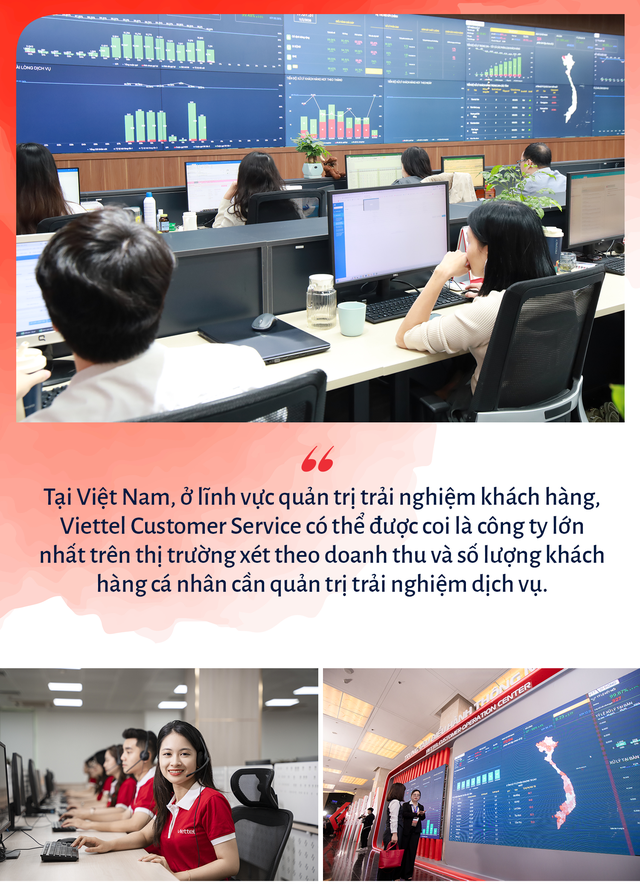
If previously, the Call Center only provided customer-answering services (pure labor), now VCX provides a comprehensive customer experience management ecosystem: from consulting services; platforms and infrastructure serving interaction; to customer experience management and operation services.
Accordingly, VCX also redefines the Call Center in the age of AI. They do not see AI as a competitor but become a companion. Accordingly, AI answers repetitive questions, while humans focus on resolving more complex situations. While AI analyzes data, humans design the experience; AI handles millions of interactions, humans decide the journey that customers will go through. And most importantly, AI helps humans at VCX do less work but think more.
Previously, Viettel's Call Center was an internal service department (Cost Center) of Viettel. After being converted into an independent company for just over 1 year (Viettel Customer Service - VCX), they became an enterprise generating over a trillion VND in revenue and profitable right in the first year of operation. In Vietnam, in the field of customer experience management, VCX can be considered the largest company in the market in terms of revenue and number of individual customers needing service experience management.
Bài: CafeF
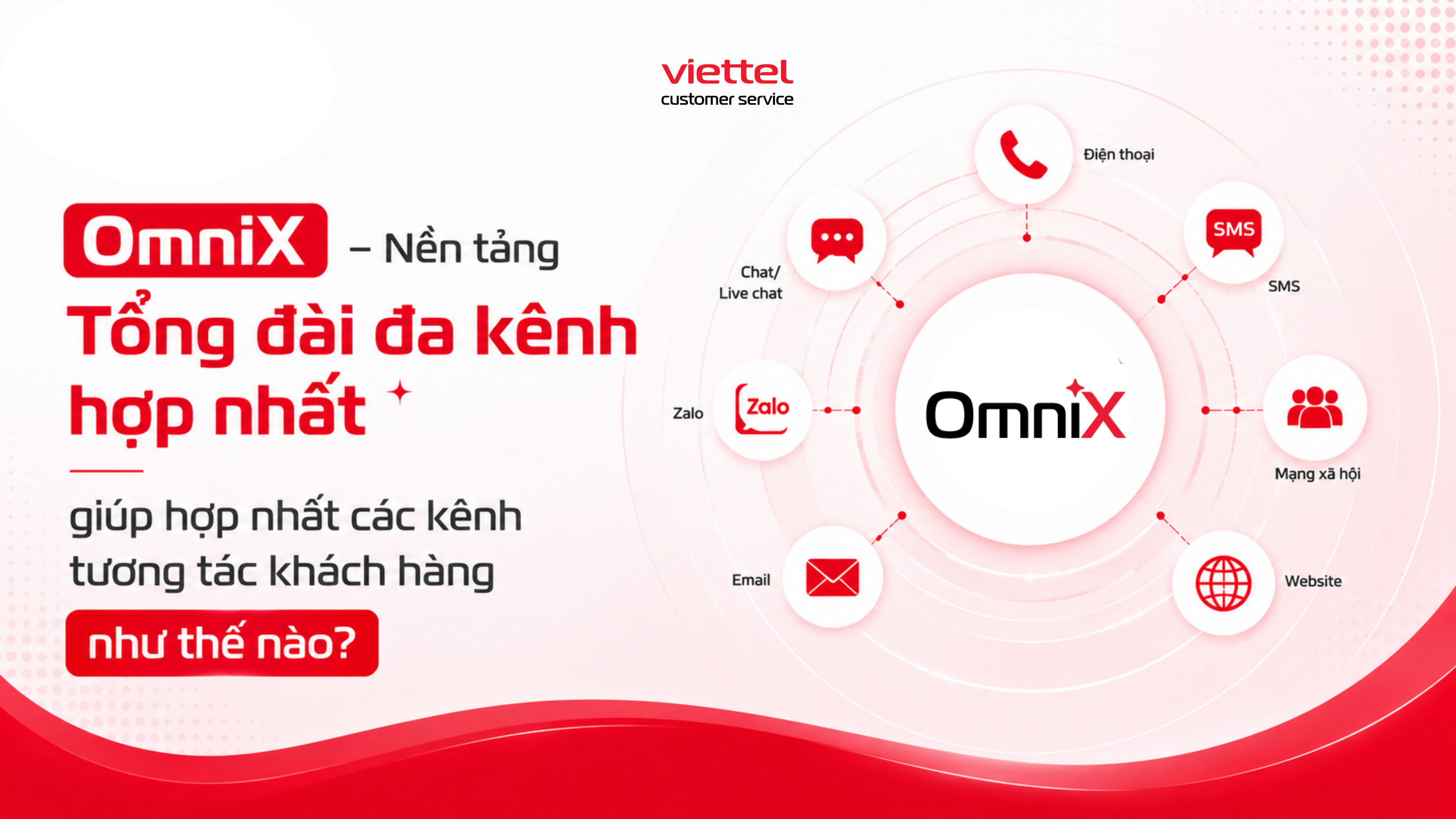
Viettel Customer Service is a subsidiary of the Viettel Group, operating in the technology and customer service sector. The company provides a comprehensive ecosystem including services (Contact Center Outsourcing, BPO, Upsale, Customer Experience, Loyalty, Document Processing and Digitization, Warranty & Repair Services) and technology solutions (OmniX, CXBot, KnowX Hub, AI-DMS, vCOC, InsightCI, WorkforceX).
Contact Viettel Customer Service today for solutions tailored to your business!
Contact Information:
Hotline: 1800 9397 / Email: dvkh@viettel.com.vn
Website Viettel Customer Service / Facebook Viettel Customer Service / Zalo Viettel Customer Service
Address: 23rd floor, Vinacomin Building, 3rd Duong Dinh Nghe Street, Yen Hoa Ward, Hanoi.








![[VnEconomy] Unifying Customer Service Channels: A Strategic Step in the Age of AI](/cms/api/v1/public/files/view/omnix-bao-MjC3Jlm9.png)


