An internal knowledge base helps businesses centralize documents, processes, and operational knowledge, reduce information retrieval time, standardize workflows, and improve employee productivity. It serves as an essential foundation for efficient knowledge management and streamlined business operations.
Throughout daily operations, businesses continuously generate and accumulate large amounts of information, ranging from training materials and internal policies to operational procedures and practical experience. However, when this information is scattered across multiple platforms or depends heavily on individual employees, accessing, updating, and using it effectively can become challenging.
Building an internal knowledge base helps businesses overcome information fragmentation while establishing a reliable, centralized source of knowledge to support management, training, and daily operations.

1. What Is an Internal Knowledge Base?
An internal knowledge base is a centralized system for storing, organizing, and managing a company's documents, information, and operational knowledge, enabling employees to easily search, access, and apply relevant information in their daily work.
An internal knowledge base typically includes:
Operational guidelines and standard operating procedures (SOPs).
Company policies, regulations, and product or service information.
Training materials and professional guidelines.
Frequently asked questions (FAQs) and troubleshooting instructions.
Institutional knowledge, professional expertise, and practical experience accumulated within the organization.
Unlike traditional document storage, an internal knowledge base is designed not only to preserve information but also to make knowledge easier to find, update, share, and reuse.
When supported by a Knowledge Management System (KMS), businesses can further organize information by department or operational function, manage access permissions, and maintain consistency across their knowledge resources.
2. Why Do Businesses Need an Internal Knowledge Base?
Businesses need an internal knowledge base to address five common challenges: fragmented information, time-consuming searches, inconsistent procedures, inefficient employee training, and operational inefficiencies.
2.1. Centralize Information and Eliminate Knowledge Fragmentation
In many organizations, documents and operational knowledge are stored across emails, shared folders, management software, and individual devices. When employees need specific information, they often have to search multiple sources and may struggle to identify the most accurate or up-to-date version.
An internal knowledge base addresses this challenge by consolidating and organizing information within a centralized system.
As a result, businesses can categorize documents by function, manage updates more effectively, and ensure employees can access the right information whenever they need it.
2.2. Reduce Information Search and Retrieval Time
Searching for information manually can interrupt workflows, especially in departments that frequently rely on policies, procedures, and operational guidelines.
For example, when a customer requests clarification about a service policy, a customer service representative may need to review several documents or contact another department to verify the details.
With an internal knowledge base, relevant information is organized centrally and can be retrieved more efficiently. This enables employees to spend less time searching, respond more quickly, and focus on higher-value tasks.
When integrated with AI Search technology, the system can also support semantic search, allowing users to find relevant information based on meaning and context rather than relying solely on exact keywords.
2.3. Standardize Processes and Ensure Information Consistency
When different versions of the same procedure exist across departments, employees may follow inconsistent instructions.
This can lead to operational errors, particularly in organizations with multiple branches, departments, or large workforces.
An internal knowledge base establishes a shared source of information, enabling businesses to update procedures and communicate changes across relevant teams.
For instance, when a customer service policy changes, the updated documentation can be made available through the system so that employees follow the same guidelines.
This helps reduce misinformation, minimize operational inconsistencies, and maintain consistent service quality.
2.4. Improve Employee Training and Development
An internal knowledge base helps businesses standardize training materials, enables new employees to access relevant information independently, and reduces reliance on direct, one-on-one guidance.
Instead of repeatedly asking colleagues for assistance, employees can search for procedures, review operational instructions, and explore documented examples of common workplace situations.
For existing employees, the knowledge base also serves as a continuous learning resource, helping them stay informed about new policies, processes, and professional knowledge.
When integrated with a Learning Management System (LMS), businesses can connect knowledge resources with training programs, assessments, and employee development activities.
2.5. Increase Productivity and Optimize Operational Efficiency
An internal knowledge base improves productivity by reducing information search time, minimizing repetitive tasks, and enabling employees to follow standardized operational guidelines.
For example, customer service representatives frequently need to access product information, service policies, and complaint-handling procedures. When these resources are centrally managed, employees can retrieve relevant guidance more efficiently and handle customer requests with greater confidence.
Furthermore, documenting institutional knowledge and practical experience helps organizations reduce the risk of knowledge loss when employees leave or change roles.
Over time, this supports operational continuity, improves cross-functional collaboration, and enables businesses to scale more effectively.
3. How Can Businesses Build an Effective Internal Knowledge Base?
To build an effective internal knowledge base, businesses should focus on three essential elements: structured information management, consistent knowledge updates, and appropriate technology adoption.
3.1. Organize and Categorize Knowledge Resources
Businesses should identify essential documents and knowledge resources, categorize them by department, business function, or operational process, and establish a consistent information structure.
Each knowledge category should have a designated owner or responsible team to ensure that information is reviewed, updated, and managed throughout its lifecycle.
3.2. Establish Knowledge Update and Quality Control Processes
An internal knowledge base delivers value only when its information remains accurate, relevant, and aligned with actual business operations.
Organizations should establish clear procedures for content approval, version control, and access permissions based on employee roles and responsibilities.
These measures help prevent the use of outdated documentation while ensuring that sensitive or business-critical information is appropriately managed.
3.3. Apply AI to Improve Knowledge Search and Utilization
Artificial intelligence is transforming how businesses search for, access, and use internal knowledge.
Instead of manually reviewing multiple documents to find answers, employees can ask questions in natural language and retrieve relevant information through AI-powered search and assistance tools.
Two commonly used AI technologies in intelligent knowledge management systems include:
AI Search: Supports semantic and contextual search, helping users discover relevant content even when their queries do not match the exact wording used in documents.
AI Assistant: Helps employees answer questions, summarize information, and retrieve guidance from managed internal knowledge resources.
However, the effectiveness of AI depends heavily on the quality of the underlying information.
Therefore, businesses should prioritize knowledge standardization, regular updates, and information quality control before expanding their use of AI.
4. KnowXHub – An Intelligent Knowledge Management System by Viettel Customer Service
KnowXHub is an intelligent Knowledge Management System (KMS) developed by Viettel Customer Service (VCX). It helps businesses centrally manage documents, processes, and operational knowledge while leveraging AI technologies to improve information search, accessibility, and knowledge utilization.
Rather than storing information across disconnected platforms, businesses can use KnowXHub to establish a centralized knowledge repository that enables employees to access and apply relevant information more efficiently in their daily work.
The system offers several key capabilities:
Centralized Knowledge Management: Supports the storage, organization, updating, and management of documents, operational procedures, and guidelines within a unified system.
Intelligent Search with AI Search: Uses semantic search technology to help employees quickly identify information relevant to their needs.
Knowledge Utilization with AI Assistant: Supports question answering, information retrieval, and content summarization based on internal knowledge resources.
Training and Knowledge Sharing Support: Enables employees to independently access learning resources, update their knowledge, and strengthen their professional capabilities.
By combining centralized knowledge management with AI technologies, KnowXHub helps businesses reduce manual information searches, improve knowledge accessibility, and support standardized operational processes.
In customer service operations, the system enables employees to quickly retrieve service policies, product information, and issue-resolution guidelines, contributing to faster responses, more efficient workflows, and consistent customer experiences.
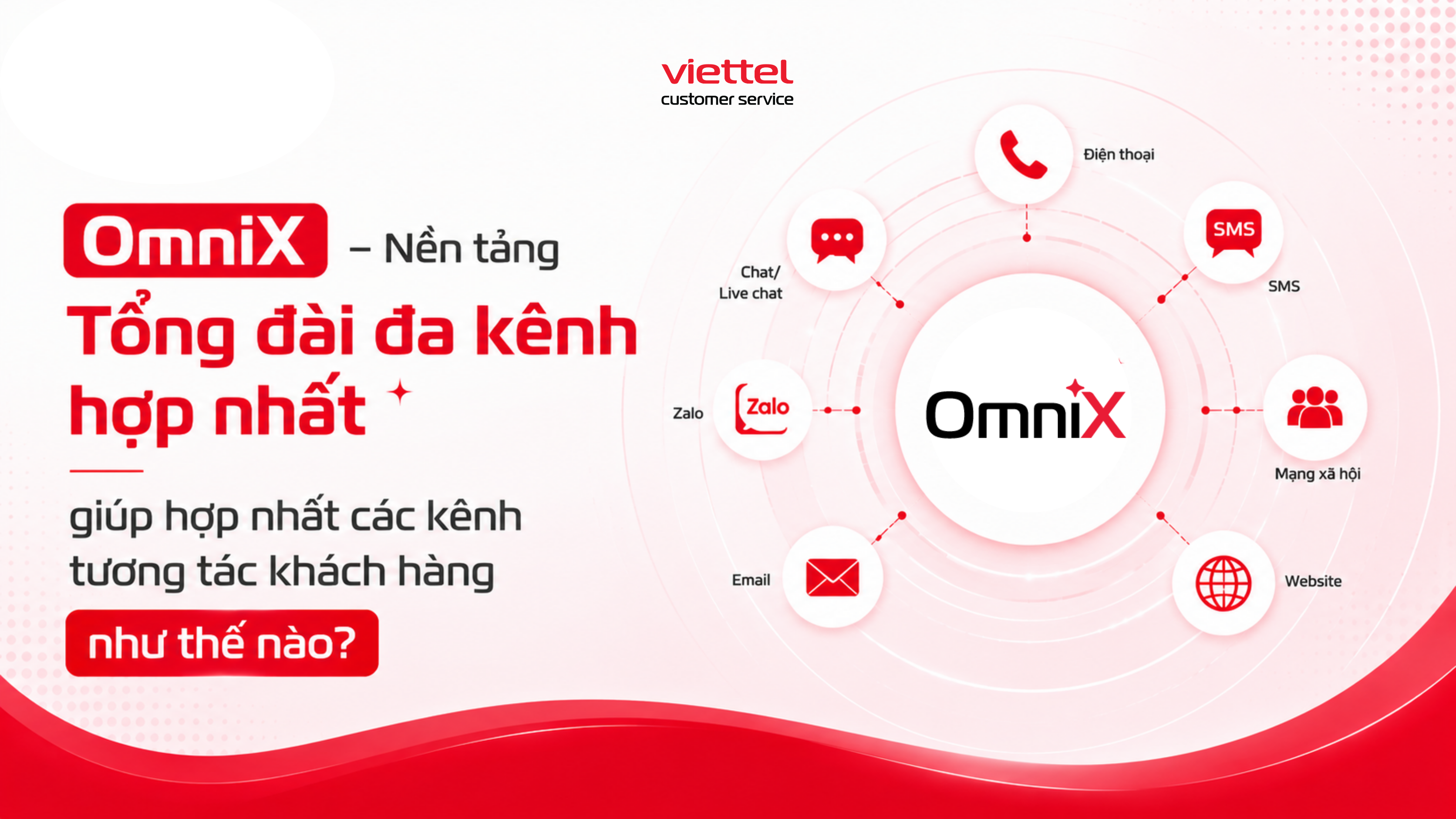
Viettel Customer Service is a subsidiary of the Viettel Group, operating in the technology and customer service sector. The company provides a comprehensive ecosystem including services (Contact Center Outsourcing, BPO, Upsale, Customer Experience, Loyalty, Document Processing and Digitization, Warranty & Repair Services) and technology solutions (OmniX, CXBot, KnowX Hub, AI-DMS, vCOC, InsightCI, WorkforceX).
Contact Viettel Customer Service today for solutions tailored to your business!
Contact Information:
Hotline: 1800 9397 / Email: dvkh@viettel.com.vn
Website Viettel Customer Service / Facebook Viettel Customer Service / Zalo Viettel Customer Service
Address: 23rd floor, Vinacomin Building, 3rd Duong Dinh Nghe Street, Yen Hoa Ward, Hanoi.