AI is changing how businesses discover and leverage internal knowledge.
As internal data continues to grow, employees may still spend considerable time searching for the procedures, policies, and operational guidelines they need. AI is opening up new ways to access organizational knowledge, but its effectiveness depends not only on technology, but also on data quality and how information is organized and managed.
Challenges in Searching and Accessing Internal Information

In many organizations, procedures, policies, and operational guidelines are stored across multiple systems. Employees may need to search different sources, ask colleagues, or wait for support from specialized teams to obtain the information they need.
The challenge lies not only in the volume of documents, but also in how they are organized and how easily they can be searched. Users may not know the exact document title, may use keywords that differ from those in the document, or may be unable to identify the latest version. Even finding a document does not necessarily mean finding the answer to a specific situation.
When information retrieval relies heavily on individual experience, businesses also face challenges in onboarding new employees, transferring knowledge, and maintaining consistency across departments. The cost goes beyond the time spent searching. It also includes workflow disruptions and resources consumed by repetitive support requests.
According to Mr. Truong Quang Viet, Director of Viettel Customer Service (VCX): “The challenge for businesses is not simply how much data they can store, but how to help employees find the right information and apply it to their work. AI can support this process, but it must be built on quality data and a clear knowledge management framework.”
Applying AI to Enterprise Search and Knowledge Management
Rather than requiring users to enter exact keywords, Semantic Search enables systems to understand the meaning behind queries and retrieve relevant content. When combined with Retrieval-Augmented Generation (RAG), AI can draw on internal documents to generate answers based on the available information sources.

This approach allows employees to search for information based on their work-related needs instead of having to figure out where relevant documents are stored. However, effectiveness still depends on the quality of the underlying data. If documents are outdated, contain conflicting information, or lack proper update mechanisms, AI may struggle to deliver reliable answers. Therefore, applying AI to knowledge management must go hand in hand with data standardization, access control, and information consistency.
This is also the approach behind KnowXHub, an AI-powered Knowledge Management System developed by Viettel Customer Service. In addition to semantic search and question answering based on internal data, the platform supports knowledge management, training, competency assessment, and information delivery to employees throughout their workflows.
According to data provided by Viettel Customer Service, the system achieves over 90% accuracy in information retrieval. The AI Agent Mate assistant handles tens of thousands of interactions daily, with response accuracy of approximately 88%. Some workflows have recorded processing time reductions of 24% to 40%, while overall labor productivity has increased by approximately 7.1%.
Built on a cloud-native architecture with open APIs, KnowXHub can integrate with platforms such as CRM, ERP, HRM, and Contact Center systems. According to Viettel Customer Service, the platform has been deployed in seven countries: Vietnam, Laos, Cambodia, Timor-Leste, Myanmar, Peru, and Tanzania.
In 2026, KnowXHub received the Silver Winner award and the Best of Category distinction at the Globee Awards for Technology, an annual international technology awards program held in the United States. It was recognized in the Best AI-Powered Search & Semantic Discovery Solution category and also received recognition at the Vietnam Digital Transformation Awards 2026.
These achievements demonstrate the platform’s breadth of application. However, the long-term effectiveness of knowledge management should ultimately be measured by improvements in day-to-day operations: employees finding information faster, processing requests more efficiently, and relying less on manual support.
For businesses, the goal is not simply to introduce AI into their systems, but to ensure that internal knowledge can be easily found and effectively applied in everyday work.
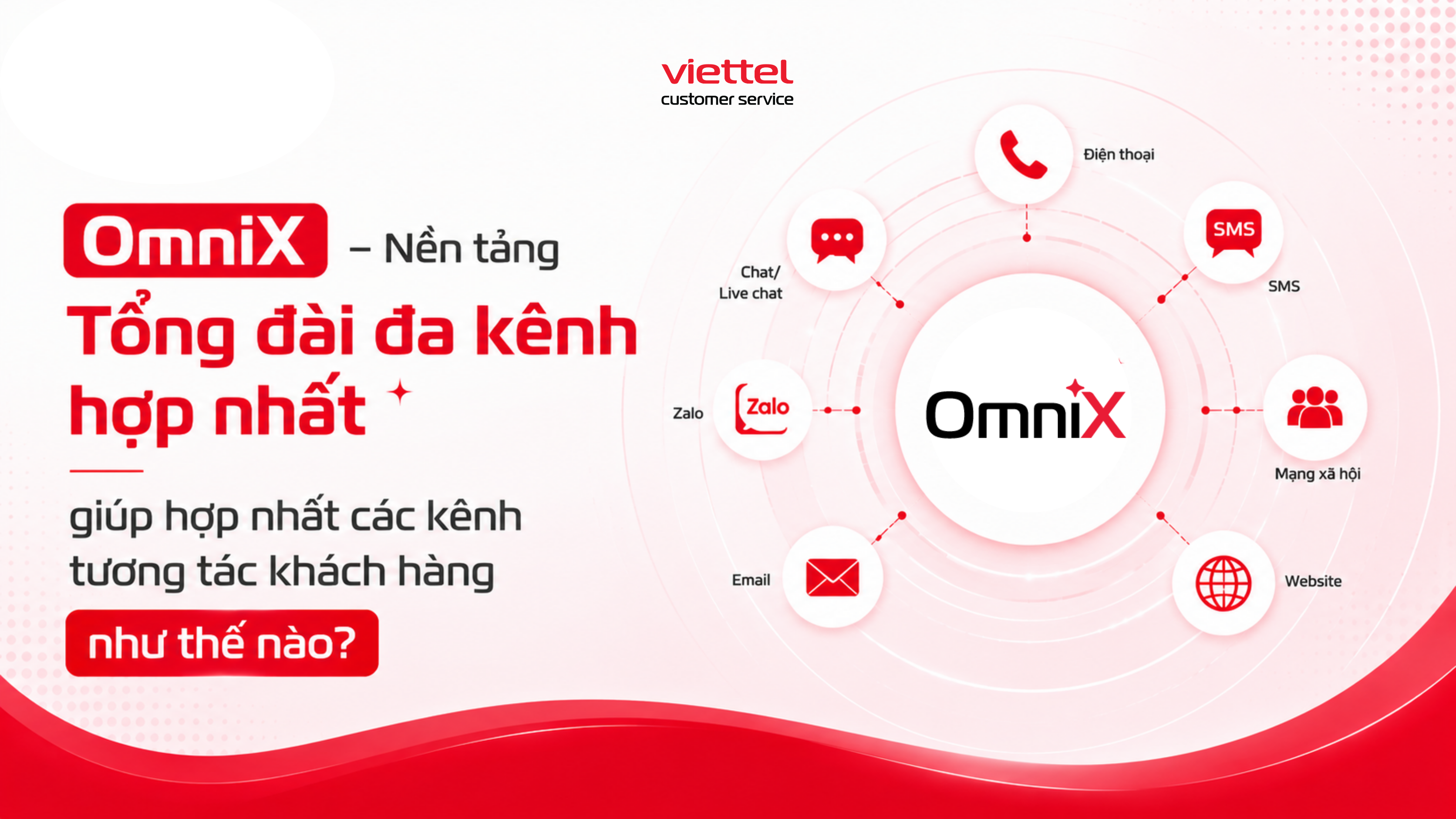
Viettel Customer Service is a subsidiary of the Viettel Group, operating in the technology and customer service sector. The company provides a comprehensive ecosystem including services (Contact Center Outsourcing, BPO, Upsale, Customer Experience, Loyalty, Document Processing and Digitization, Warranty & Repair Services) and technology solutions (OmniX, CXBot, KnowX Hub, AI-DMS, vCOC, InsightCI, WorkforceX).
Contact Viettel Customer Service today for solutions tailored to your business!
Contact Information:
Hotline: 1800 9397 / Email: dvkh@viettel.com.vn
Website Viettel Customer Service / Facebook Viettel Customer Service / Zalo Viettel Customer Service
Address: 23rd floor, Vinacomin Building, 3rd Duong Dinh Nghe Street, Yen Hoa Ward, Hanoi.