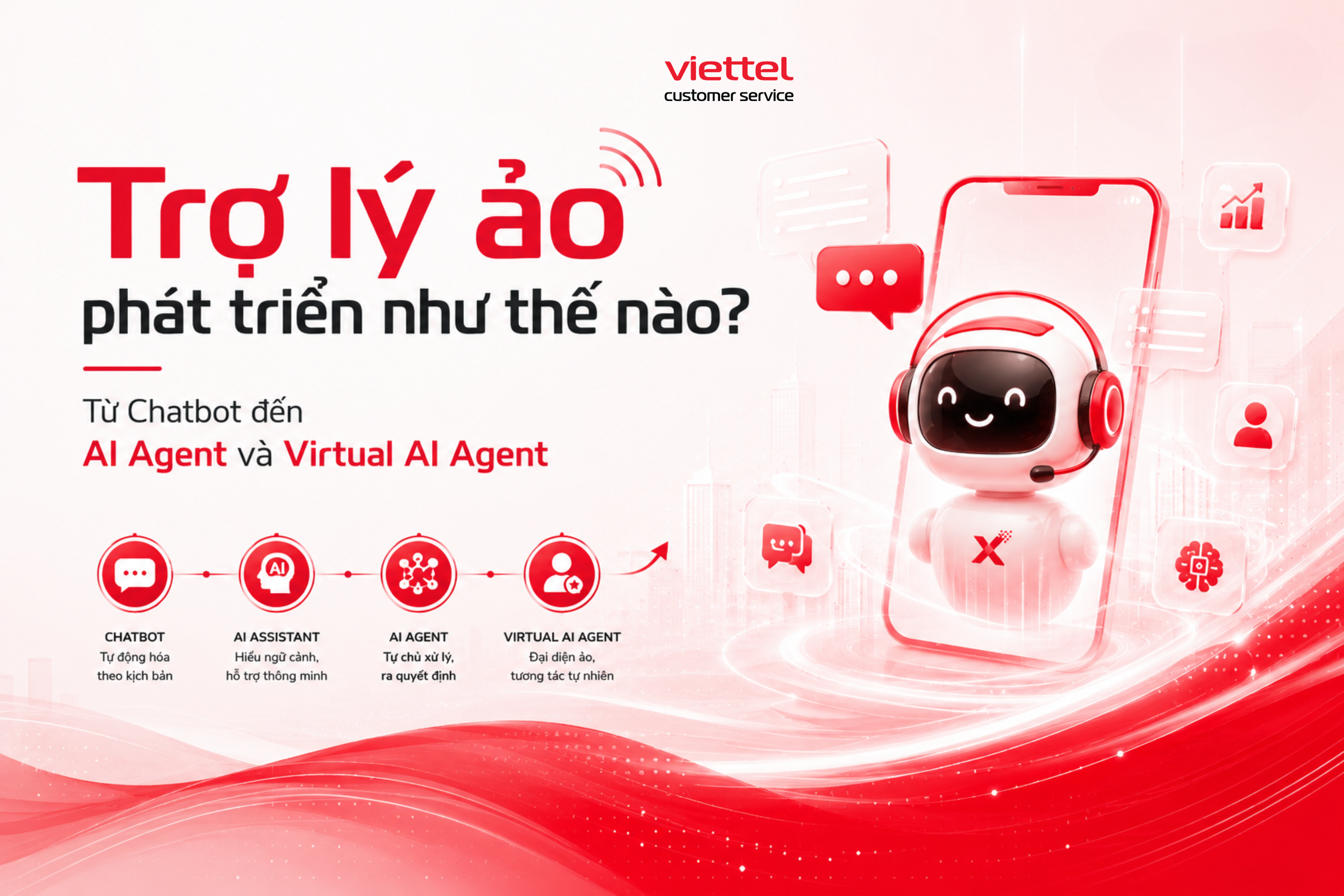
AI Agents are opening up a new approach to customer service. Instead of having employees handle every request, businesses can delegate repetitive tasks with clear processes and sufficient data to AI for automation. In this way, AI goes beyond simply answering questions and can receive, understand, and directly handle a portion of customer requests.
One notable example is Airbnb. According to CEO Brian Chesky during the company’s Q2/2026 earnings call, Airbnb’s AI assistant can now resolve nearly 45% of incoming requests without requiring support staff, up from around 40% in Q1. The AI assistant has also been deployed in more than 50 languages, and Airbnb plans to expand into voice support in the near future.
More notably, the impact of AI is not only reflected in the percentage of requests handled automatically. Airbnb reported that customer support costs per booking decreased by approximately 16% year over year in Q2/2026.
This case shows that AI Agents in customer service are gradually shifting from a role of “supporting responses” to “participating in resolution.” This is also a perspective that Vietnamese businesses can consider when identifying suitable use cases for AI adoption.
How is Airbnb using AI Agents to transform customer service?
One notable aspect of Airbnb’s AI implementation is that the system does more than simply provide information to customers. For suitable requests, the AI assistant can receive and resolve them directly without transferring them to a support employee.
This creates a significant change in customer service operations. In practice, employees spend a considerable amount of time handling questions and requests that occur repeatedly. When AI can handle these cases first, employees can focus on more complex issues that require judgment or human intervention.
In other words, AI does not necessarily have to replace customer service employees entirely. The greater value lies in redistributing work between AI and humans: AI handles repetitive and easily standardized tasks, while employees focus on situations where they can create greater value.
This impact is also reflected in operating costs. The approximately 16% reduction in customer support costs per booking shows that automation does not only affect response speed but can also have a direct impact on business efficiency.
At the same time, Airbnb continues to expand AI across other touchpoints in the customer journey and plans to introduce AI voice support.
Therefore, the key lesson from Airbnb is not simply that “AI can answer customers.” More importantly, AI can become an operational layer between customers and customer service teams, handling suitable requests before human intervention is required.

From the Airbnb case: Where should Vietnamese businesses start with AI Agents?
Not every business needs to start with a major goal such as “using AI to replace call center agents.” A more practical approach is to look at current customer service operations and identify tasks with three characteristics: highly repetitive, relatively clear processes, and the ability to be standardized.
These may include frequently asked questions, order confirmations, appointment reminders, post-service surveys, customer information collection, receiving requests, or categorizing and routing customers to the appropriate department.
When AI can handle these requests, employees no longer need to spend time on the entire volume of incoming interactions. Instead, they only need to take over cases that AI cannot resolve or situations that require in-depth consultation.
Therefore, for Vietnamese businesses, a suitable implementation approach is to start with a few specific customer service scenarios instead of trying to automate the entire operation from the beginning.
Businesses can select processes with high volume, high frequency of repetition, and relatively well-defined scripts. They can then measure effectiveness through indicators such as the automation rate, response time, employee workload, cost per interaction, or customer satisfaction.
Once the initial scenarios are operating stably, businesses can continue expanding into other processes.
This approach also enables AI Agents to become part of customer service operations step by step, rather than turning into a large technology project whose effectiveness is difficult to demonstrate from the outset.
CXBOT – Start Automating Customer Service with AI Agents
For businesses, the challenge therefore does not necessarily begin with fully automating customer service operations. Instead, they can select processes that are highly repetitive, high-volume, and supported by clearly defined scripts for AI to handle first. This allows businesses to gradually introduce AI Agents into customer service, starting with specific touchpoints rather than changing the entire system at once.
CXBOT by VCX is one solution that can help businesses get started with these use cases. The Conversational AI platform combines AI Chatbot and AI Callbot capabilities, enabling businesses to automate customer service operations 24/7 across multiple channels.
AI Chatbot – Automate interactions across digital channels
CXBOT supports customer interactions through Zalo OA, Website, App, and Social via text and voice. AI processes conversations based on context, knowledge, and configured scripts, helping automatically answer questions, support customers, and handle requests with clearly defined processes.
AI Callbot – Automate customer service over the phone
CXBOT can make and receive two-way calls, making it suitable for scenarios such as surveys, debt reminders, information confirmation, post-sales care, or outbound calls based on predefined scripts. For inbound calls, AI can receive requests, answer frequently asked questions, and route customers to the appropriate department.
Flexible for different business processes
CXBOT allows businesses to design and adjust conversational scripts for customer service, sales, or surveys. The system can handle large volumes of calls and messages and operate 24/7, while also supporting multiple voice options by gender and Northern, Central, and Southern Vietnamese accents. Through this, businesses can gradually automate repetitive customer service tasks without having to change the entire process.
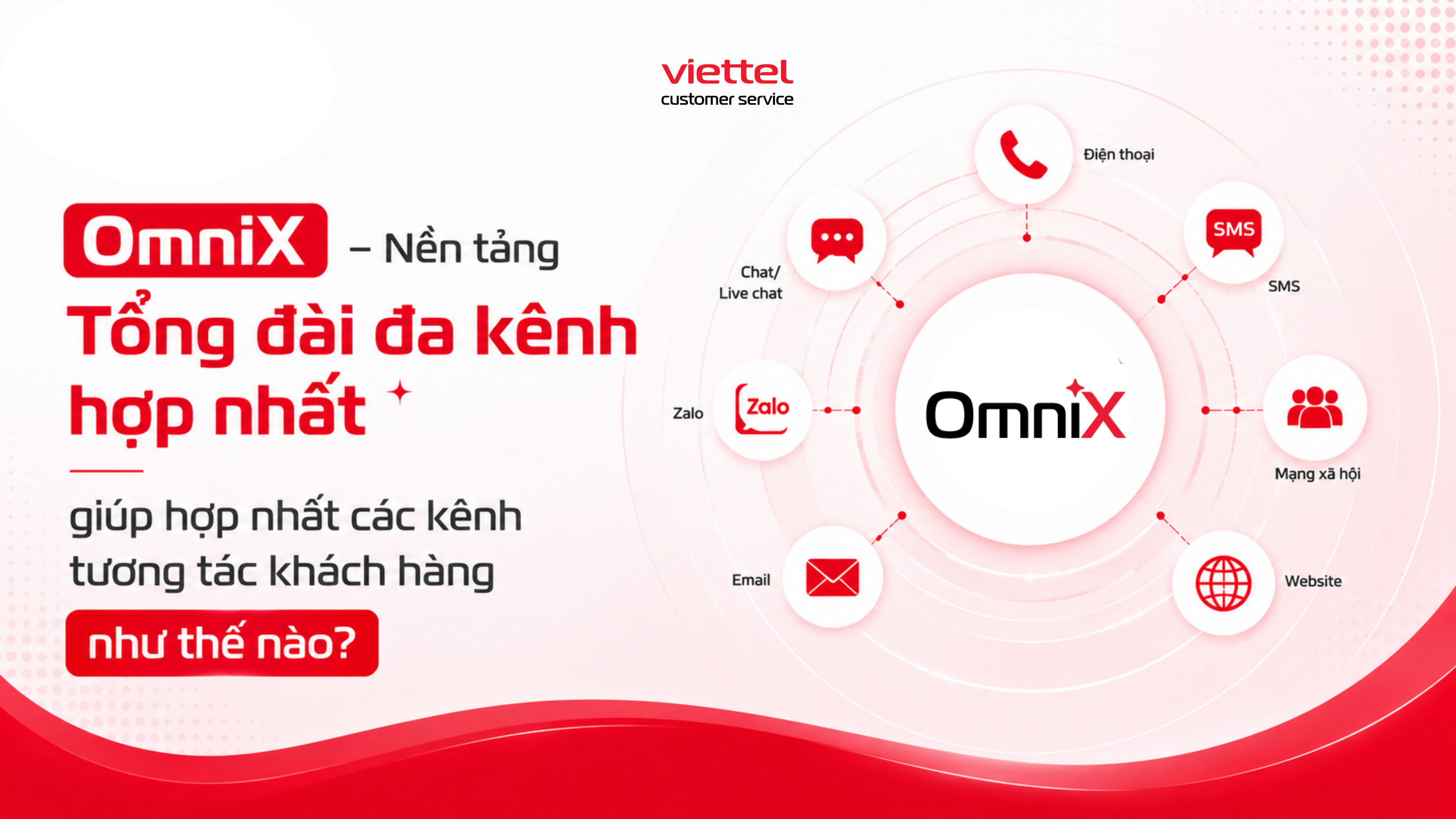
Viettel Customer Service is a subsidiary of the Viettel Group, operating in the technology and customer service sector. The company provides a comprehensive ecosystem including services (Contact Center Outsourcing, BPO, Upsale, Customer Experience, Loyalty, Document Processing and Digitization, Warranty & Repair Services) and technology solutions (OmniX, CXBot, KnowX Hub, AI-DMS, vCOC, InsightCI, WorkforceX).
Contact Viettel Customer Service today for solutions tailored to your business!
Contact Information:
Hotline: 1800 9397 / Email: dvkh@viettel.com.vn
Website Viettel Customer Service / Facebook Viettel Customer Service / Zalo Viettel Customer Service
Address: 23rd floor, Vinacomin Building, 3rd Duong Dinh Nghe Street, Yen Hoa Ward, Hanoi.