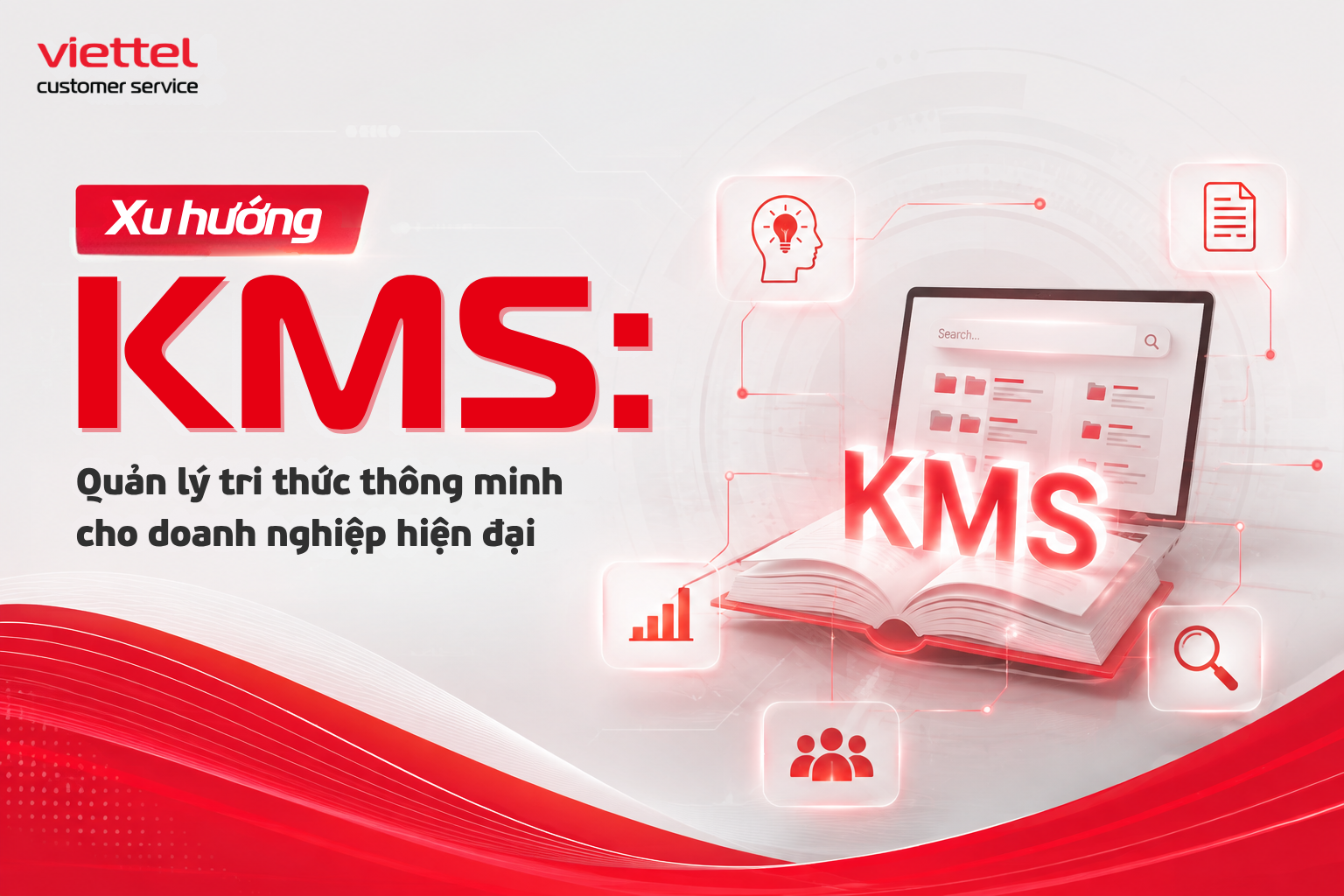
KMS Trends: When Knowledge Becomes a Competitive Advantage
In the digital transformation journey, knowledge is a critical asset that helps businesses maintain operational quality and enhance customer experience. However, as data and documents continue to grow, many organizations still struggle with fragmented information, difficult search and retrieval, inconsistent training, and knowledge loss when employees leave or change roles.
These challenges can lead to significant productivity losses. According to a 2025 study by Notion, employees may spend the equivalent of 4.8 working weeks per year simply searching for information scattered across multiple tools. The same survey found that 48% of businesses plan to improve their internal knowledge search and retrieval capabilities over the next 12 months.
Against this backdrop, the Knowledge Management System (KMS) is evolving from a simple storage tool into a platform that enables businesses to intelligently manage, leverage, and develop knowledge, turning internal expertise into a competitive advantage.
KMS Is No Longer Just a Document Repository
Today’s KMS trends go beyond centralizing documents in one place and are moving toward managing the entire knowledge lifecycle. A KMS enables organizations to create and update content, manage access permissions, control versions, and search for information within a unified platform. This helps employees access the right knowledge at the right time while ensuring compliance with established workflows and processes.
This shift also reflects growing market demand. According to The Business Research Company, the global knowledge management software market was valued at approximately USD 27.89 billion in 2025 and is projected to reach USD 61.28 billion by 2030, representing a compound annual growth rate (CAGR) of around 17.1%.
These figures indicate that knowledge management is increasingly becoming an essential part of business operations and digital transformation strategies, rather than merely serving as an internal document repository.
Integrating AI and Training on a Single Platform
One of the most notable features of next-generation KMS platforms is the integration of KMS, LMS, and competency assessment systems. Businesses can manage documents, deliver training, conduct assessments, and track learning outcomes within a single system.
At the same time, AI enables contextual search, content summarization, and rapid question answering, helping employees reduce the time spent searching for information and improve overall work efficiency.
KMS Helps Improve Operational Efficiency
Beyond knowledge management, KMS platforms enable businesses to track learning progress, document usage, and how effectively employees apply knowledge in their daily work. These insights help managers identify which content is frequently used, which knowledge needs to be updated, and where competency gaps exist across the workforce.
The effectiveness of AI in knowledge management has also been demonstrated in real-world applications. A 2025 GenAI for Knowledge Management case study published by APQC/ASQ showed that the solution helped reduce information search time by 50% and increase end-user satisfaction by 80%.
When knowledge is centrally managed, continuously updated, and delivered to the right people at the right time, businesses can reduce errors, shorten training time, minimize dependence on individual experience, and preserve institutional knowledge despite workforce changes. This provides an important foundation for process standardization and long-term improvements in operational productivity.
KnowX Hub – A Comprehensive Knowledge Management System
KnowX Hub is a knowledge management system developed by Viettel Customer Service, designed in line with next-generation KMS trends by integrating Knowledge Management (KMS), Learning Management (LMS), competency assessment, and an AI Assistant within a single platform.
The system enables businesses to manage the entire knowledge lifecycle, from content creation, updates, and access control to training, assessment, and usage effectiveness measurement. With the AI Assistant, employees can perform intelligent, context-aware searches and quickly access the knowledge they need while working.
This is particularly valuable for Contact Centers, where employees constantly handle large volumes of information, procedures, and customer scenarios. Building a unified knowledge source helps shorten information retrieval time, standardize responses, and maintain consistent service quality across teams.
When knowledge is no longer scattered across documents or dependent on the experience of individual employees, KMS becomes a foundation that enables businesses to transform knowledge into an operational capability that can be preserved, measured, and continuously developed. This transformation is also an important step toward building a learning organization that can adapt more quickly in the AI era.
Viettel Customer Service is a subsidiary of the Viettel Group, operating in the technology and customer service sector. The company provides a comprehensive ecosystem including services (Contact Center Outsourcing, BPO, Upsale, Customer Experience, Loyalty, Document Processing and Digitization, Warranty & Repair Services) and technology solutions (OmniX, CXBot, KnowX Hub, AI-DMS, vCOC, InsightCI, WorkforceX).
Contact Viettel Customer Service today for solutions tailored to your business!
Contact Information:
Hotline: 1800 9397 / Email: dvkh@viettel.com.vn
Website Viettel Customer Service / Facebook Viettel Customer Service / Zalo Viettel Customer Service
Address: 23rd floor, Vinacomin Building, 3rd Duong Dinh Nghe Street, Yen Hoa Ward, Hanoi.