
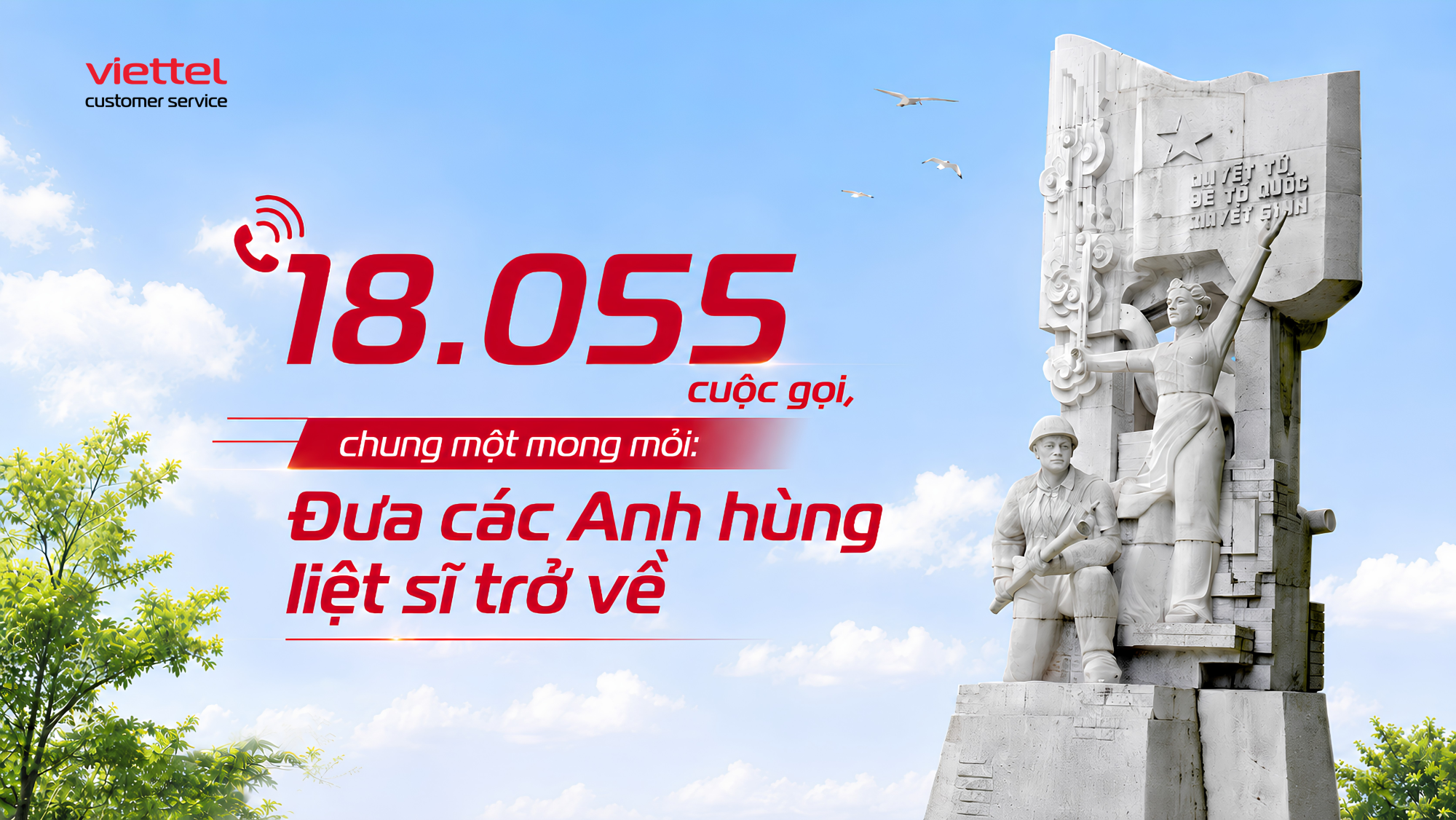
To date, the hotline has received 18,055 calls, including reports providing information about fallen soldiers, requests for assistance in locating martyrs, and inquiries regarding DNA identification procedures. Every call is carefully recorded, categorized, and forwarded to relevant authorities for verification and cross-checking.
Behind these figures are thousands of deeply moving stories. In a 50-square-meter operations room at the Military Broadcasting and Television Center, 15 hotline agents work in three shifts each day, from 6:00 a.m. to 10:00 p.m., patiently listening to calls from across the country. Some callers simply want to share a name or the memory of a place that has changed over the past half century. Others call to recount memories of comrades who never returned, while many families continue searching for their loved ones after decades of waiting.
The work of the hotline agents goes far beyond answering phones and entering data. Many callers are elderly, speak softly, or use regional dialects. Even a slight misunderstanding of a name or location could affect the verification process. For that reason, every detail is carefully confirmed before being entered into the system.
Rather than following a rigid questionnaire, agents often allow callers to tell their stories first. Through thoughtful conversations, memories that have lain dormant for more than fifty years—unit designations, locations, or comrades' names—gradually resurface, providing valuable clues for search and identification efforts.
One of the hotline agents, Nguyen Phuong Thao, recalls receiving several calls related to K76A Hospital, an important wartime medical facility.
According to Thao, the hospital represents a significant source of historical information because many soldiers received treatment there before returning to the battlefield. Even a small detail—a name, a period of treatment, or a fragment of memory—can help authorities verify records, supplement existing files, or open new directions in the search process.
"Behind every call is a family that has spent years, sometimes generations, waiting for their loved one to return. That's why we listen carefully, record every detail, and promptly transfer the information to specialists for verification," Thao shared.
One case that has stayed with her involved the child of a fallen soldier. The family only knew that their father had once been treated at K76A Hospital before he was killed in action. Beyond that, almost no documents or records remained. Despite years of searching, they still have not found his final resting place.
"So much time has passed. Many witnesses are gone, and records have been lost, yet the family has never given up hope. We encourage them to provide any additional information they may discover because every call handled with care creates another opportunity to bring families closer to finding their loved ones," she said.
The hotline also receives many unforgettable stories: a mother in her nineties who visits her village cemetery every day hoping to find her son's name; a veteran carrying old photographs to honor fallen comrades; and a person who, after years of hesitation, finally reported what might have been the remains of a fallen soldier. Every name, every location, and every memory—no matter how small—could become a vital clue.
On Vietnam's War Invalids and Martyrs Day (July 27), as millions of people pay tribute to those who sacrificed their lives for the nation, the headsets at the hotline remain on and the phones continue to ring.
Each call received today is more than just information—it is another step in the humanitarian journey of the "500-Day Campaign for Searching, Recovering, and Identifying the Remains of Unidentified Martyrs." Every verified clue brings renewed hope that more fallen heroes will one day return to their families and their homeland.
As Vietnam commemorates the 79th War Invalids and Martyrs Day (July 27, 1947 – July 27, 2026), the campaign continues to embody the nation's commitment: to leave no fallen soldier forgotten and no family without hope.
After more than four months, authorities have recovered nearly 1,500 sets of martyrs' remains and discovered seven mass graves, reflecting the collective efforts of government agencies, organizations, and people across the country.
Supporting this meaningful campaign, Viettel Customer Service has partnered in operating two dedicated hotlines—18008022 (toll-free within Vietnam) and +84 965 001 222 (for international callers)—serving as an important bridge connecting veterans, martyrs' families, witnesses, and the authorities responsible for search, recovery, and identification efforts.
Viettel Customer Service is a subsidiary of the Viettel Group, operating in the technology and customer service sector. The company provides a comprehensive ecosystem including services (Contact Center Outsourcing, BPO, Upsale, Customer Experience, Loyalty, Document Processing and Digitization, Warranty & Repair Services) and technology solutions (OmniX, CXBot, KnowX Hub, AI-DMS, vCOC, InsightCI, WorkforceX).
Contact Viettel Customer Service today for solutions tailored to your business!
Contact Information:
Hotline: 1800 9397 / Email: dvkh@viettel.com.vn
Website Viettel Customer Service / Facebook Viettel Customer Service / Zalo Viettel Customer Service
Address: 23rd floor, Vinacomin Building, 3rd Duong Dinh Nghe Street, Yen Hoa Ward, Hanoi.